
On my monthly podcast, “What’s So Funny About…?”, I ask every guest a simple but loaded question: “Should anything be off limits in comedy?” So far, every guest has said no—comedy itself has no limits. But they often follow that up by admitting that most comedians do. It’s fascinating how personal limits shape the boundary-pushing nature of comedy, even as the art form claims to be boundaryless.
One topic that comes up frequently is whether a White comedian can say the “n-word.” By the “no limits” argument, the answer is technically yes. Comedy as an art form doesn’t have rules—it thrives in the space where we break societal taboos, challenging our perceptions and comfort zones. But the real question isn’t can they say it; it’s should they say it. And that’s where things get murky.
For example, on a recent episode, I spoke with Philip Ogren, a local comedian here in Colorado. Philip’s take was refreshingly introspective. He shared that, while he wouldn’t want to impose his own personal boundaries on other comics, he chooses not to cross certain lines in his own material. His reasoning? He doesn’t want to say anything that might harm someone he loves. That’s his personal limit—one that’s rooted in empathy and relationships. Yet even he acknowledged that for comedy to reach its full potential as a pressure valve for society, some comedians may need to go where others won’t. That tension is what makes comedy so powerful—and so dangerous.
As someone who sees comedy as an art form, I wrestle with this tension myself. I don’t think it’s my place to tell another artist what kind of art to make. Comedy has always been about pushing boundaries, flipping assumptions, and saying the unsayable. Historically, some of the most influential comedians—Richard Pryor, George Carlin, Joan Rivers—made their mark by daring to say things no one else would. Their work didn’t just make people laugh; it made them think, sometimes in uncomfortable ways. But there’s a flipside to that freedom: all art, comedy included, is subject to interpretation. And when we step into spaces that challenge societal norms, we have to live with how people react to what we create. We don’t get to control how our audience feels or responds.
This is where I think the conversation gets really interesting. Comedy doesn’t exist in a vacuum. It’s inherently social—it’s shaped by the culture it critiques and contributes to. So when a comedian decides to push a particular boundary, they’re not just making a joke; they’re making a statement about what boundaries they think should or shouldn’t exist. That can be liberating, but it can also come at a cost. In a society as divided as ours, comedy that fractures more than it unites can risk undermining its own power.
This brings me to a question I’ve been sitting with: Does pushing the limits of comedy serve or take away from social cohesion? In its best moments, comedy can bring people together by revealing shared absurdities or hypocrisies. It can open up dialogue about hard truths in a way that feels disarming rather than confrontational. But there’s a delicate balance. When a joke leans too hard into shock value or targets vulnerabilities without care, it can deepen divides rather than bridging them. The goal shouldn’t be to avoid offense entirely—offense is often a byproduct of truth-telling—but to make sure the jokes we tell are worth the tension they create.
For me, this balance is what makes comedy such an important art form. It’s not just about making people laugh; it’s about exploring the edges of what’s acceptable, what’s uncomfortable, and what’s possible. But with that freedom comes responsibility. If you’re going to tell a joke that risks harm, you should have a good reason for doing it—and be willing to stand by the consequences. Comedy is art, yes, but it’s also conversation. And in every conversation, we have the power to connect or to alienate. The best comedians, I think, know how to do both in a way that leaves their audience better than they found it.
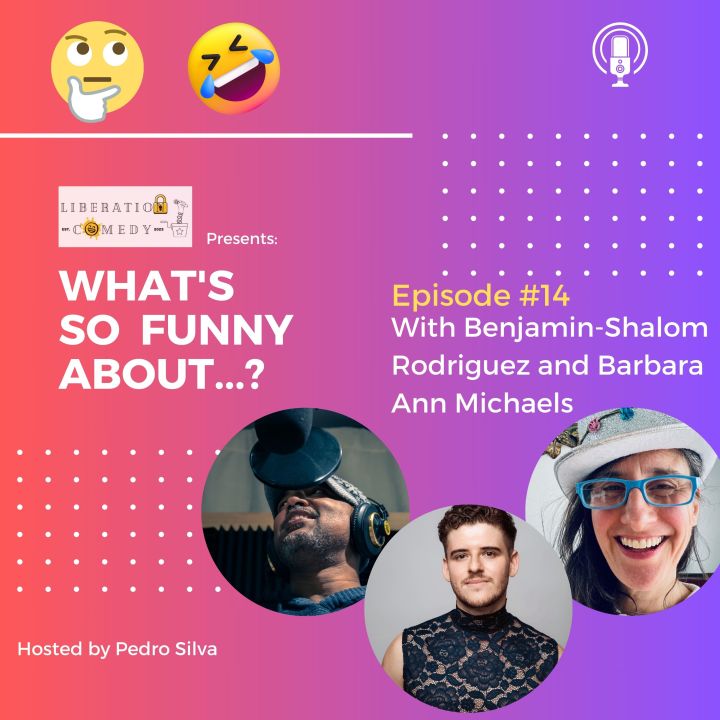
To go deeper into this topic, check out this episode of the podcast with Benjamin-Shalom Rodriguez and Barbara Ann Michaels:
 The Liberation Comedy Project